How to play
The rules
If you ever played car quartet cards (Top Trumps, Quartett, Supertrumpf) in a schoolyard, you already know this game. The difference: every card is a real AI model with real numbers from independent benchmarks.
The aim
Win all of your opponent’s cards. In timed modes, whoever holds the most cards when the round limit runs out wins.
A round
- 1
Look at your top card. The CPU looks at its own top card. Neither of you can see the other’s.
- 2
The chooser names a stat. Against Rookie and in the Daily you lead the first round; otherwise a coin toss decides. After that, the winner of each round picks the next stat.
- 3
Compare. The better value takes both cards to the bottom of its pile. Each stat row shows an arrow: ▲ higher wins, ▼ lower wins.
- 4
Ties go to the pot. Both cards sit in the middle and the next round’s winner takes the whole pot. The same player chooses again.
The stats
Intelligence higher wins
Intelligence Index: a composite score from 10 hard evaluations covering reasoning, knowledge, coding, agents and science.
Hallucination lower wins
Hallucination rate: of the questions a model gets wrong, how often it confidently makes up an answer instead of saying it doesn't know. Lower wins.
Context higher wins
Context window: how many tokens of input the model can consider at once.
Knowledge higher wins
Training-data cutoff: the most recent month the model learned about. Later wins. N/D means the lab hasn't disclosed it, and an N/D card loses this stat.
Speed higher wins
Median output speed in tokens per second, measured on the labs' own APIs.
Response lower wins
End-to-end response time: seconds to receive a 500-token answer, thinking time included. Lower wins.
Price lower wins
Blended price per million tokens (3:1 input to output). Lower wins.
Modalities higher wins
Number of supported input and output modalities: text, image, audio and video.
Claude Opus 5.5
Anthropic · Max

 Frontier Super Trump
 - Intelligence57.6
- Hallucination59%
- Context1M
- KnowledgeJun 2026
- Speed96tok/s
- Response667s
- Price$8.00
- Modalities3
The Super Trump
One card in the deck, A1 Claude Opus 5.5 (the highest Intelligence score in the deck), is the Super Trump. It beats every card on any stat, even its terrible response time.
Except one group: the four Speedster cards. The small, fast accelerators beat the Super Trump whatever the stat.
N/D: Not disclosed
Several labs don’t publish a training-data cutoff. Those cards show N/D for Knowledge and lose that stat to any card with a known date. Two N/D cards tie. We never guess a date.
Boosts
Once per match, and only on your turn:
Prompt Leak
Reveal the CPU’s top card before you pick a stat.
Regenerate
Send your top card to the bottom of your pile and play the next one.
Modes & opponents
- Quick Duel: 10 cards each, 15 rounds.
- Grand Prix: the full deck, 16 each, up to 40 rounds. Unlocks at level 3.
- Daily Challenge: the same deal for every player, one ranked attempt a day, scored on cards held, rounds won, streaks and a fast-knockout bonus.
- Rookie plays on gut feel. Pro knows its best stats. Champion (level 4) counts cards, regenerates once and turns stat hints off.
Progression
- XP levels you up through the ranks: Perceptron → N-gram → RNN → Transformer → Foundation → Frontier → Superintelligence.
- Compute is the currency. Earn it from rounds, wins, daily logins and achievements; spend 150 on a booster pack.
- Garage: every card you win from the CPU joins your collection. Complete a group of four for a Quartet bonus.
- Mastery & foils: win 3 / 10 / 25 rounds with a card for bronze, silver and gold. Gold earns its holographic foil.
The 8 groups
Frontier · Monolith
The flagships. Huge brains and top benchmark scores, but slow to answer and expensive to run.




Heavyweight · Mainframe
Big, capable everyday models that cost less than the flagships.




Flash · Portable
The big labs’ cheap, fast models.




Open Giant · Server Rack
Huge open-weight models. Anyone can download them and run them on their own racks.




Challenger · Prototype
Up-and-coming labs building models that rival the leaders.

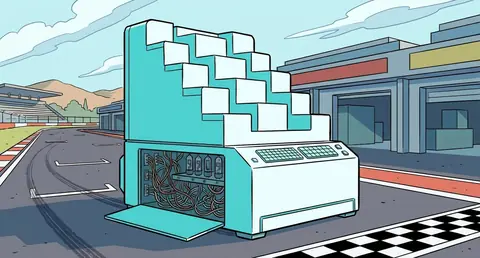
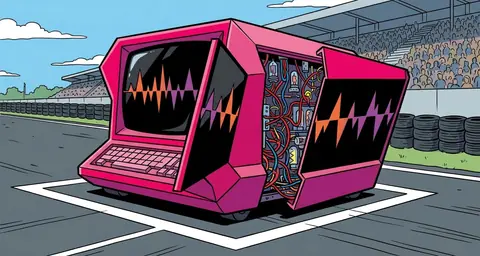

Speedster · Accelerator
Built for raw tokens per second. The only cards that can beat the Super Trump.




Pocket · Gadget
Small, efficient open models that fit on your own hardware.



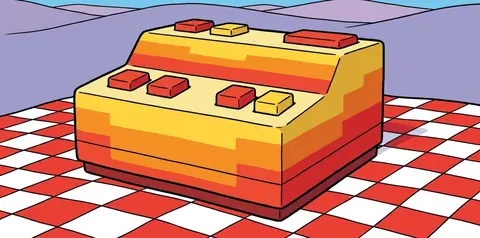
Maverick · Contraption
Odd ones out, each with one stat no other card can match.